
Roof Condition and Longevity
A roof's useful life depends on the whole assembly, installation quality, exposure, maintenance and current condition, rather than its covering alone. Published product expectations cannot predict every existing roof. Assess coverings, fixings, supporting layers, drainage and junctions together before deciding whether maintenance, targeted repair or broader renewal is appropriate next.
When asking how long a roof lasts in the UK, homeowners often want to know whether they can plan ahead or need to act now. A material label cannot answer that reliably. This guide explains how to interpret age, product claims and inspection findings without treating an advertised lifespan as a countdown for your own home.
Service life, guarantee and remaining life mean different things
Service life describes how long a product or assembly performs its intended function under particular conditions. A manufacturer's expectation may relate to a named product installed in a specified system. It is not automatically a prediction for a roof with different materials, unknown workmanship or a history of leaks and alterations.
A guarantee is a promise on stated terms. Read who provides it, what it covers and any conditions concerning installation, registration and maintenance. Materials cover and workmanship cover may address different risks. Neither should be interpreted as proof that no inspection or attention will be needed during the stated period.
Remaining life concerns the roof that exists today. It depends on present condition and the work needed to keep the assembly functioning. An assessment can identify deterioration and priorities, but concealed defects and future weather make a precise expiry date an unreliable promise. Ask for evidence and limitations alongside any broad expectation.
Look beyond the visible covering
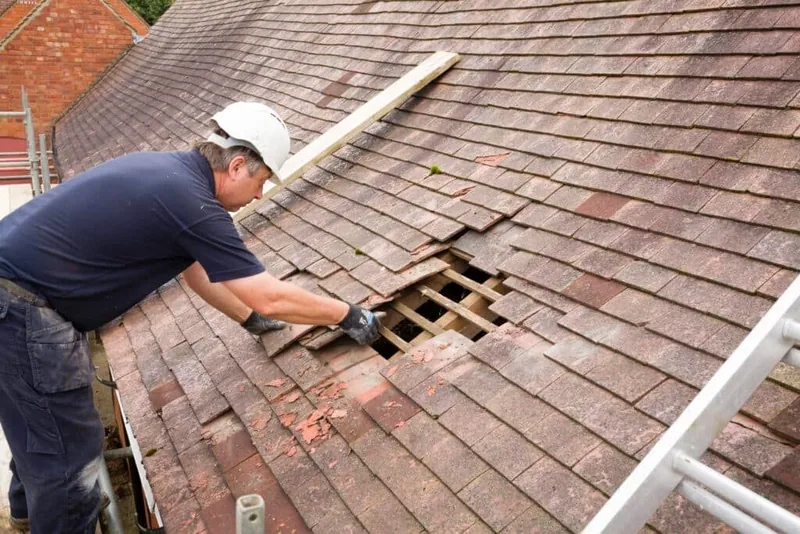
Roof coverings are the most visible component, which makes them an easy focus for a lifespan question. However, fixings, battens, underlay or decking may have a different condition from the material above. Junctions and rainwater outlets can also need attention while the main covering remains usable. A roof's performance depends on those parts working together.
Marley's roof-fixing guidance stresses a specification suited to the site and roof design. This is a useful reminder that installation and exposure matter alongside material choice. Identical-looking coverings do not establish identical performance on different buildings.
| Component | Condition evidence to request |
|---|---|
| Tiles or slates | Extent of breakage, slipping and deterioration, rather than colour alone. |
| Fixings and battens | Whether coverings remain securely supported and which areas were accessible. |
| Underlay or flat-roof deck | Visible damage, moisture concerns and limitations on inspection. |
| Flashings and junctions | Continuity of weathering around walls, chimneys and rooflights. |
| Drainage | Obstructions, overflow evidence and the condition of outlets and gutters. |
| Structure | Distortion or other findings needing further specialist investigation. |
Why roofs of similar ages can age differently
Exposure varies with the building's height, surroundings and roof form. A sheltered roof and an open site can face different weathering demands. Extensions, rooflights and chimneys introduce junctions that need appropriate detailing. Historic repairs may also influence present condition, especially where incompatible materials or superficial patches obscure the original arrangement.
Maintenance changes the information available as well as the roof itself. Keeping records of leaks, gutter clearance and repairs helps reveal patterns. A problem identified at a junction can be investigated before it is mistaken for general covering failure. Maintenance does not stop ageing, and it cannot restore an unsuitable structure or failed assembly by cleaning alone.
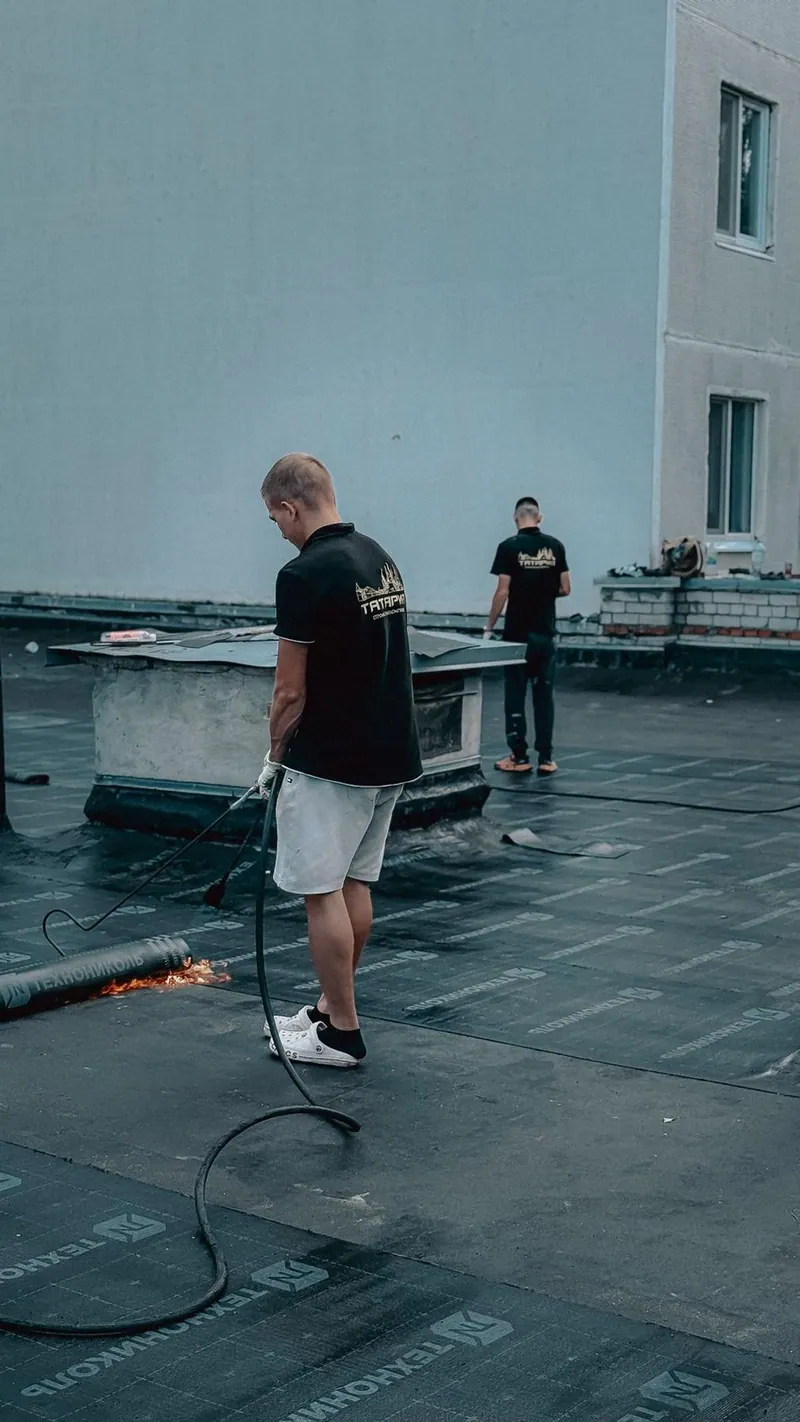
For a flat roof, ask about the complete waterproofing system and the substrate supporting it. PermaRoof's EPDM guidance emphasises preparation and compatible detailing; the membrane name alone does not describe these. On pitched roofs, a sound-looking surface likewise leaves unanswered questions about supporting layers and fixing condition.
Avoid treating appearance or a guarantee as a diagnosis
Natural weathering can change a roof's appearance without proving that it has failed. Marley's maintenance guidance distinguishes appearance changes from the need for repair and advises against high-powered jet washing. An unusually clean roof should not be assumed sound, just as surface growth should not automatically be taken as evidence that replacement is due.
A slate roof on an older Moulsham terrace may include historic repairs, while a newer extension may have its own membrane system and maintenance record. Establish each roof area's history separately. The age of the house, the main covering and a later addition may all differ.
If renewal becomes appropriate, it is a new specification decision. Check the approval and thermal requirements for the proposed scope instead of assuming that replacing an old roof simply repeats its original construction. Building-control questions should be resolved before the work is committed.
When a condition assessment is more useful than a lifespan chart
Seek an assessment when you lack maintenance records, notice recurring defects or need to plan work before buying or renovating. Ask for priorities: urgent action, planned repairs, routine maintenance and areas requiring further investigation. This helps you budget around observable condition without relying on unsupported predictions about how many years remain.
Photographs assist an initial enquiry to Chelmsford Roofing Experts, but an on-site inspection of roof details is required for accurate diagnosis and a fixed quotation. A roof condition survey is not a full RICS structural building survey. The report should identify restricted areas rather than imply that inaccessible components have been verified.
If the covering remains serviceable, targeted work or maintenance may be proportionate. Where deterioration is widespread, the assessment should explain why broader renewal is recommended and which components need replacing. A useful conclusion describes the evidence, the practical options and what cannot yet be confirmed.
Questions Before You Start
Can the material alone tell me when replacement is due?
No. The material is only part of the roof assembly. Fixings, supporting layers, junctions and previous installation work affect performance. A material comparison can help with a new specification, but an existing roof needs a condition assessment before renewal timing can be discussed responsibly.
Does a long guarantee mean the entire roof is covered?
Only the written terms establish what is covered. Check the provider, named products, workmanship provisions and any maintenance or registration requirements. A product guarantee may not cover every part of the roof or every possible cause of a leak. Keep the documentation available for future reference.
Does moss mean a roof is reaching the end of its life?
Surface growth alone does not establish remaining life. Its extent, drainage effects and the covering's condition matter. Ask whether removal is necessary and which method is compatible. Aggressive cleaning can introduce damage, so cosmetic improvement should not be confused with extending the life of the whole roof.
Can I plan repairs even if the roof's age is unknown?
Yes. Present condition, symptoms and inspection findings can guide priorities without a complete installation history. Explain what records are missing and retain the new assessment and repair documents. Future comparisons will then have a firmer basis than estimates derived from the property's age.
Plan around condition rather than a countdown
Share the roof's known history, current concerns and any available photographs with Chelmsford Roofing Experts. An assessment can help you understand immediate needs, sensible maintenance and the evidence required before considering renewal, with clear limits where components remain concealed.
Official and Technical Guidance

One Response