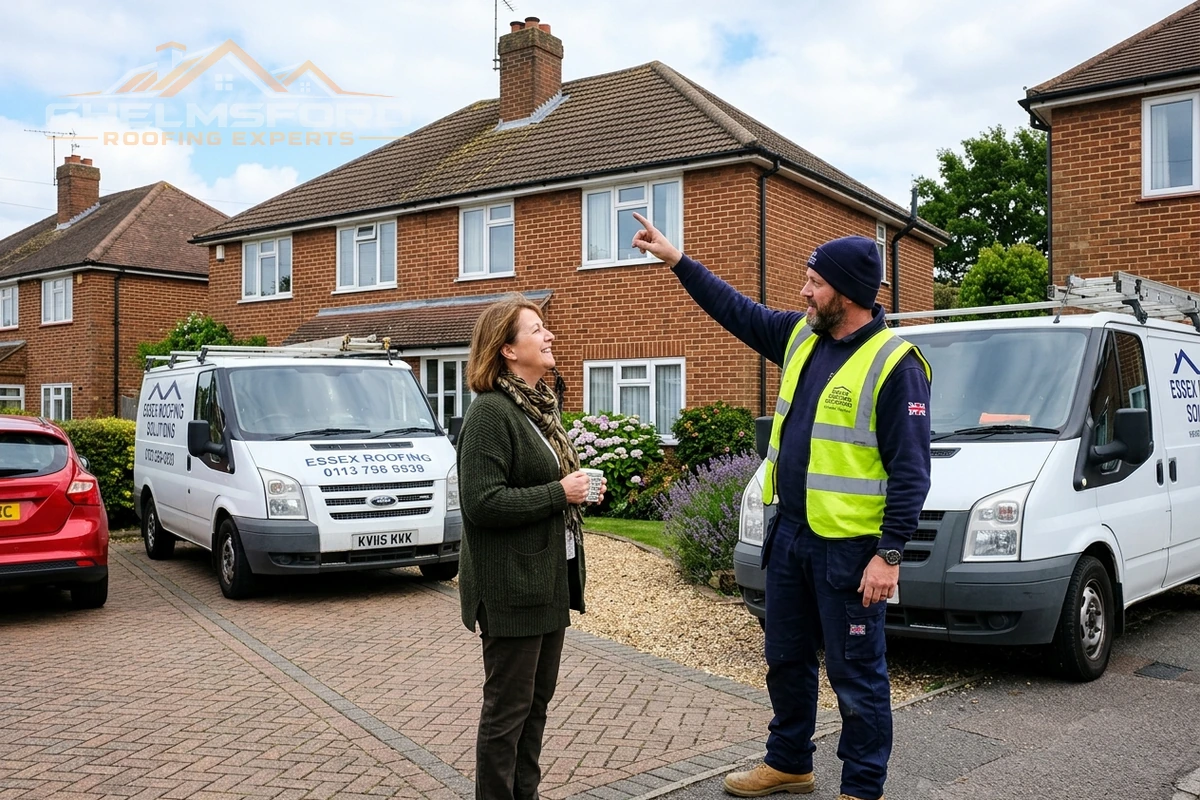
You Do Not Need to Diagnose the Roof Before Enquiring
Describe the concern in your own words. A stain near a bedroom window, an overflowing gutter or damage visible after strong winds is enough to start a conversation. Say which part of the building is affected and what you have noticed over time. You do not need to identify a flashing, membrane or roof component before asking for an assessment.
For planned work, explain the objective: an extension, a new roof, renewal of an existing covering or a better understanding of condition. Drawings and previous reports can help establish the context. Make clear whether you are the owner, an appointed representative, a buyer or a person managing the premises, so any permissions needed for access can be discussed.
What to Include in Your Roofing Enquiry
The most useful first message combines the location, the symptom or project and the practical arrangements for an assessment. Include what you know without guessing at concealed causes. If the concern changes with rainfall, wind direction or use of a room, explain that pattern as an observation rather than a confirmed diagnosis.
Photographs should come from a safe position at ground level. A wider image helps identify the building and roof area, while an existing photograph of a stain or visible defect can illustrate the concern. Do not climb a ladder or walk on the roof to obtain a closer view.